| BLOG OVERVIEW / KEY TAKEAWAYS Key Takeaway 1: Dog odor builds up in layers across every fabric, surface, and air system in your home. Eliminating it permanently requires addressing all layers simultaneously, not just masking the surface. Key Takeaway 2: Enzymatic cleaners are the most effective product category for breaking down the odor-causing compounds in dog saliva, urine, and skin oils at a molecular level. Key Takeaway 3: The source of most persistent dog smell is your dog’s own hygiene routine. Regular bathing, ear cleaning, dental care, and anal gland maintenance eliminates the problem at the origin. |
Introduction: Why Does Your House Smell Like Dog?
Dogs are wonderful. The persistent, slightly musky, sometimes very musky smell they leave throughout your home is less wonderful.
If you have tried every air freshener on the shelf and your house still smells like dog five minutes after a guest walks in, the problem is not your cleaning routine. The problem is that you have been masking odor instead of eliminating it.
Dog smell is not a single substance. It is a combination of sebaceous gland secretions from your dog’s skin, saliva on every surface they have licked, dander embedded in fibers, urine residue in carpet backing, and bacteria living in your dog’s ears, mouth, and coat. A spray of citrus freshener covers that for about 45 minutes. This guide deals with the actual sources.
Visit our About Us page to learn more about who we are or connect via our Contact page with specific questions.
Start Here: Identify Your Odor Sources
Before cleaning anything, walk through your home and identify the primary odor zones. In most homes with dogs, these are:
- The dog’s sleeping area or bed
- Upholstered furniture the dog uses
- Carpets, rugs, and area mats
- The dog’s collar, harness, and toys
- Areas near the front door where the dog greets visitors
- Anywhere the dog has had accidents, even old ones
- The HVAC system and air filters
Tackling these in order gives you the highest return for your effort.
The Dog: The Primary Source of Dog Smell
Your dog IS the odor. Everything else is secondary. If your dog is not clean, your house will not be clean, regardless of how much you scrub. This is the most important and most overlooked principle in eliminating home pet odor.
Bathing
Most dogs need a bath every four to six weeks. Dogs with heavy skin folds, water-loving breeds, or skin conditions may need more frequent bathing with specific shampoos. Use a dog-specific shampoo that matches your dog’s coat and skin type. Human shampoos can disrupt the skin’s pH balance and ironically increase odor over time.
Ear Cleaning
Dog ears are a significant source of smell, particularly in dogs with floppy ears or recurring yeast infections. Clean your dog’s ears monthly with a vet-recommended ear cleaner. If the ear smell is strong, funky, or persistent between cleanings, consult your vet as an infection may be present.
Dental Hygiene
Dog breath is one of the most overlooked sources of indoor odor. Dogs who lick furniture, rugs, and your face deposit bacteria-laden saliva on every surface. Brushing your dog’s teeth three to five times per week using dog-specific toothpaste dramatically reduces oral bacterial load and associated odor.
Anal Gland Expression
Dogs have anal glands that can produce a very strong, fishy odor when they are full or impacted. If your dog is scooting across the floor or your home smells fishy despite regular bathing, anal gland issues may be responsible. Your vet or groomer can express the glands safely.
Room-by-Room Odor Elimination
Living Room and Common Areas
Upholstered furniture and area rugs absorb and retain dog odor more effectively than almost any other surface in your home. Here is the process:
- Remove all cushion covers and wash them in hot water with a cup of white vinegar added to the rinse cycle. This is more effective than detergent alone for odor.
- Sprinkle baking soda liberally on all upholstered surfaces. Let it sit for at least 30 minutes, ideally several hours. Vacuum thoroughly.
- Treat any accident areas with an enzymatic cleaner. Spray, let it sit for 10 to 15 minutes, and blot dry. Do not rub, which pushes residue deeper into fibers.
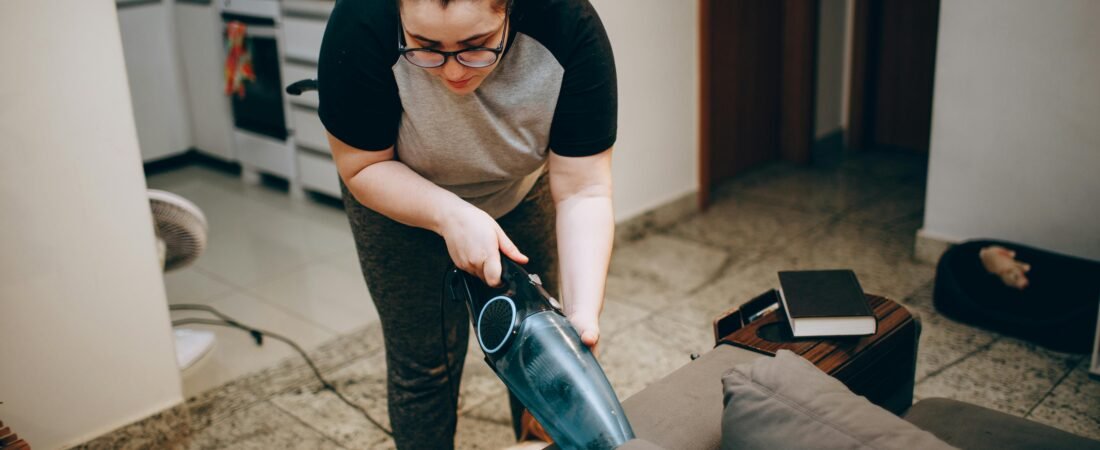
- Vacuum all soft surfaces including cushions, rugs, and curtains. Use a vacuum with a HEPA filter to capture dander particles rather than recirculate them.
Carpets and Rugs
Carpet absorbs everything including urine that soaks through the surface into the backing and pad beneath. Surface cleaning does not reach these layers.
- For old urine stains, use a blacklight in a darkened room to locate all soiled areas. They glow under UV light.
- Apply enzymatic cleaner directly to each spot. The enzymes break down the uric acid crystals that cause the persistent odor. Standard cleaners do not do this.
- For widespread carpet odor, rent or hire a professional steam cleaner. Add a pet odor enzyme solution to the cleaning tank.
- Replace carpet padding if the odor is severe and the padding is saturated. No amount of surface cleaning will fix odor that has fully penetrated the padding.
Dog Bed and Sleeping Areas
- Wash the dog bed cover weekly in hot water.
- Dry on high heat, which kills bacteria and dust mites.
- Sprinkle the insert or foam with baking soda, let sit for an hour, vacuum off before replacing the cover.
- Replace dog beds annually. Most beds become unsalvageable after 12 months of use regardless of how often you wash the cover.
Kitchen and Hard Floors
- Mop hard floors weekly with a pet-safe cleaner containing an enzymatic component.
- Pay particular attention to cracks between floorboards where dander and liquid accumulate.
- Wash your dog’s food and water bowls daily. Biofilm in water bowls is a surprisingly significant odor source.
- Clean the area around the food station regularly. Kibble dust and food residue builds up and attracts bacteria.
The HVAC System
This is the source that most people never think about and it is one of the biggest contributors to whole-home dog smell.
- Replace HVAC filters every 30 to 60 days (not the recommended 90 days when you have a dog). Use filters rated MERV 11 or higher to capture dander effectively.
- Have your ductwork professionally cleaned annually or biannually. Dander and dog hair accumulate in ducts and every time the system runs, it redistributes odor throughout the house.
- Place a standalone HEPA air purifier in the room where your dog spends the most time.
Products That Actually Work
Enzymatic Cleaners
This is the product category you need for any biological odor including urine, saliva, and skin oils. Enzymatic cleaners contain specific enzymes that break down the organic compounds causing odor at a molecular level. They do not just mask the smell. They eliminate it. Popular options include Rocco and Roxie, Nature’s Miracle, and Bissell Pet Stain and Odor Remover.
Baking Soda
Sodium bicarbonate is an effective, non-toxic odor absorber. It works by neutralizing acidic odor compounds. It is not as powerful as enzymatic cleaners for biological odors but is excellent for general deodorizing of fabrics and carpets.
Activated Charcoal
Bags of activated charcoal placed near furniture, in closets, or in the dog’s room absorb airborne odor molecules from the surrounding area. Replace every three to four months.
HEPA Air Purifiers
Highly effective at removing dander, bacteria, and odor-carrying particles from the air. Size matters. Use a unit rated for the square footage of the room you are treating.
Preventive Maintenance Routine
- Vacuum all soft surfaces twice per week.
- Wash dog bedding weekly.
- Bathe your dog every four to six weeks or as your vet recommends.
- Brush your dog three to five times per week to reduce loose hair and dander dispersal.
- Change HVAC filters monthly.
- Wipe your dog’s paws after walks to reduce tracking of outdoor bacteria indoors.
- Brush your dog’s teeth three to five times per week.
Frequently Asked Questions
Q: Why does my house smell like dog even after I clean?
Almost certainly because odor is embedded in layers you are not reaching. Check carpet padding, HVAC ducts, upholstery foam, and your dog’s own hygiene. Also ensure you are using an enzymatic cleaner rather than a standard surface cleaner, which does not break down the organic compounds causing the odor.
Q: What is the best product to eliminate dog smell?
Enzymatic cleaners are the most effective category for biological dog odors. For air quality, a HEPA purifier rated for the room size makes a significant difference. Baking soda is an effective budget option for surface deodorizing.
Q: How do I get dog smell out of a couch that cannot be washed?
Sprinkle baking soda across all surfaces, let sit for several hours or overnight, then vacuum thoroughly. Follow with an enzymatic spray on any specific spots. For deep-set odor, a professional upholstery steam cleaning service is the most effective option.
Q: How often should I wash my dog’s bed?
The cover should be washed at minimum once per week. The inner insert should be aired out regularly and replaced annually.
Conclusion
Dog smell is not inevitable. It is manageable with the right approach applied consistently. The secret is addressing the actual source, starting with your dog’s own hygiene, then working through your home’s layers systematically with enzymatic cleaners, proper vacuuming, and air filtration.
A clean-smelling home with a dog is absolutely achievable. It just requires a routine, not a miracle spray.
| DISCLAIMER The information provided in this article is for general educational and informational purposes only. It is not intended as, and should not be construed as, professional veterinary medical advice, diagnosis, or treatment. Always consult a licensed and qualified veterinarian before making any decisions regarding your pet’s health, diet, medication, or treatment plan. Shop With Pets and its authors are not responsible or liable for any damages, losses, injuries, or adverse outcomes arising from the use of or reliance on the content published on this website. Individual results may vary. Every pet is unique and what works for one dog may not be appropriate for another. In the event of a pet health emergency, contact a licensed veterinarian or an emergency animal hospital immediately. |
Sources and References:
- American Kennel Club, How to Get Rid of Dog Smell
- American Society for the Prevention of Cruelty to Animals (ASPCA), Pet Odor Management
- Environmental Protection Agency (EPA), Indoor Air Quality and Pet Dander Guidelines