| BLOG OVERVIEW & KEY TAKEAWAYS Key Takeaway 1: Paw pads crack from hot pavement, ice and de-icing salt, dry indoor air, and rough terrain. Prevention through regular paw balm application is more effective than treating established cracks.Key Takeaway 2: The most effective paw balms combine penetrating emollients like shea butter and coconut oil (which restore moisture to the thick keratinized pad tissue) with protective wax barriers like beeswax (which seal moisture in and protect against salt and heat).Key Takeaway 3: If your dog’s pads are severely cracked, bleeding, excessively thickened, or showing signs of infection, paw balm is not sufficient. These presentations warrant veterinary evaluation to rule out conditions including hyperkeratosis and autoimmune disease. |
Paw Pads Take More Punishment Than Most Owners Realize
Your dog’s paws contact every surface they walk on: hot summer asphalt, frozen winter sidewalks, salt and chemical ice melt, rough trails, pool decks. That is constant stress on specialized thick skin.
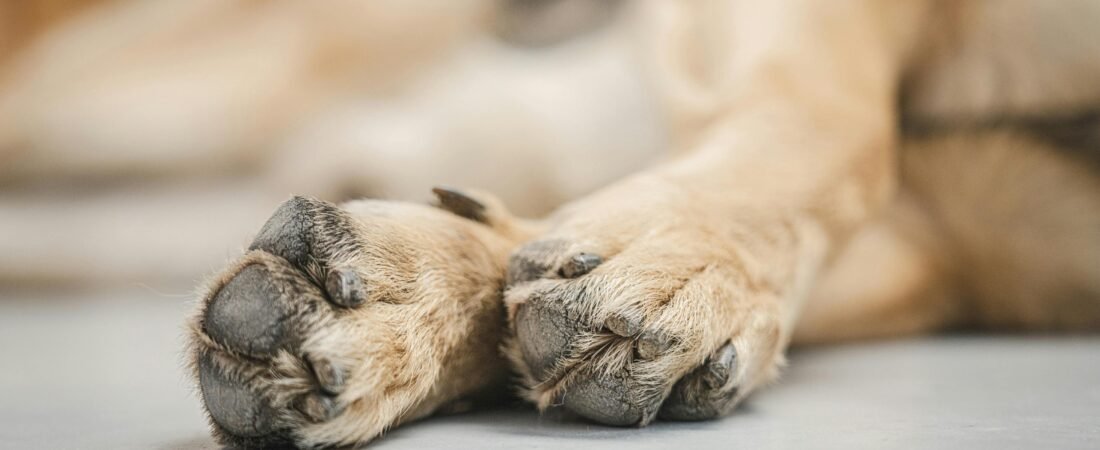
Paw pads are made of keratinized skin with fatty tissue underneath for cushioning. Durable but not impervious. Heat, cold, chemical exposure, and dry conditions all damage pad tissue over time.
Consistent paw balm application maintains the moisture and barrier integrity that keeps pads healthy through seasonal extremes.
More care guides on the Shop With Pets blog.
Why Paws Crack
- Hot pavement: Asphalt can reach 140 to 160 degrees on a hot day. If you cannot hold your hand on it for 7 seconds, it is too hot for your dog’s paws.
- Ice and salt: De-icing salts dry and irritate pad tissue and can cause chemical burns at high concentrations.
- Dry indoor air in winter: Heated indoor air is very low humidity and dries pad tissue similarly to how it affects human skin.
- Rough terrain: Extended hiking or running on rocky surfaces causes surface abrasion.
- Nutritional factors: Zinc and fatty acid deficiencies affect skin quality including paw pads.
What Makes a Paw Balm Effective
Penetrating Emollients
Emollients must penetrate the thick keratinized pad surface to be effective, not just coat it. Shea butter is one of the best pad-penetrating emollients with a fatty acid profile that improves tissue elasticity and moisture retention. Coconut oil provides similar benefits with mild antimicrobial properties. Vitamin E oil supports skin barrier repair.
Protective Wax Layer
Beeswax forms a semi-permeable barrier that seals moisture into the tissue while allowing some breathability. This barrier also physically protects against salt, pavement heat, and cold. Carnauba wax provides additional water resistance. Effective paw balms combine wax and emollients for both penetrating moisture restoration and surface protection.
Ingredients to Avoid
- Zinc oxide: Common in human skin products but toxic to dogs if licked
- Essential oils at significant concentrations: Can be irritating or toxic at levels sometimes used in paw products
- Petroleum jelly: Not harmful but primarily a surface barrier. Less effective than natural wax-emollient combinations for actual healing.
Application Technique
- Clean paws before applying to remove dirt that prevents balm from contacting pad tissue
- Apply a small amount to each pad and massage in with circular pressure. Work balm into visible cracks.
- Apply at bedtime ideally, when the dog rests and the balm absorbs without being immediately worn off
- Use a slightly thicker layer before walks on salted or hot surfaces
When a Vet Visit Is Needed Instead
- Pads that are crusty, excessively thickened, or develop a rough cauliflower-like texture
- Cracks deep enough to bleed
- Signs of infection: discharge, swelling, heat, or strong odor
- Pad changes alongside other skin or coat changes
Q&A
Q: Can I use Vaseline on my dog’s paws?
Vaseline is not toxic and provides surface barrier protection. For mild protection against salt it is adequate. For dry and cracking pads, a formulated paw balm with penetrating emollients will provide more meaningful benefit.
Q: My dog licks the paw balm off immediately. What do I do?
Apply at bedtime to minimize licking opportunity. Distract with a stuffed Kong for 10 minutes after application to allow initial absorption. Verify the product you are using is safe if licked. Most properly formulated dog paw balms are lick-safe.
| DISCLAIMER This article is for general informational and educational purposes only. It does not constitute veterinary medical advice. Always consult a licensed veterinarian before changing your dog’s diet, supplements, or care routine. Shop With Pets is not liable for any outcomes from reliance on this content. Every dog is different. In a pet health emergency, contact your vet immediately. |
Sources and References:
- Glos G. Canine Paw Pad Disorders. Veterinary Clinics of North America. 2013
- ASPCA, Household Chemicals Toxic to Pets. aspca.org
- Medleau L, Hnilica KA. Small Animal Dermatology. Saunders. 2006