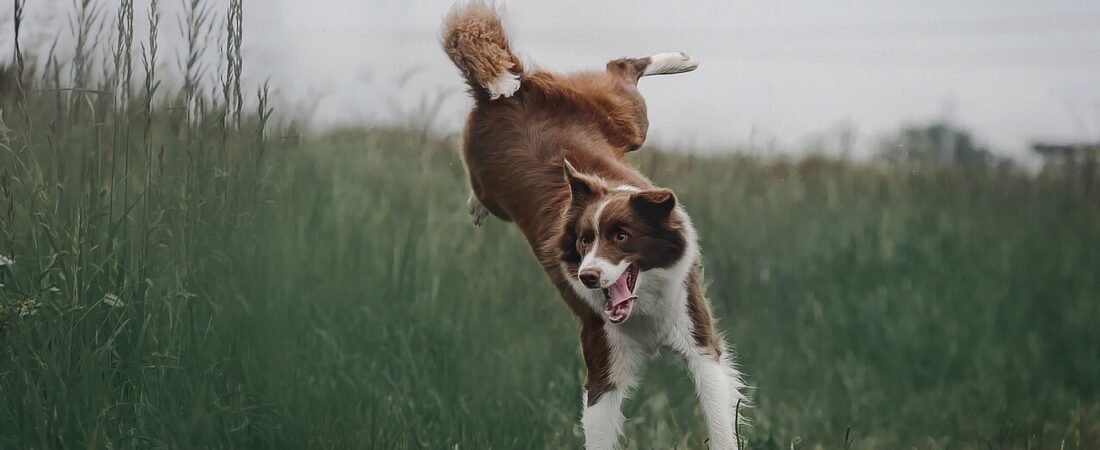
| BLOG OVERVIEW & KEY TAKEAWAYS Key Takeaway 1: Dog body language is not a collection of isolated signals. It is a language of combined, simultaneous signals. A wagging tail means nothing without reading the body posture, ear position, facial expression, and overall muscle tension at the same time. Reading individual signals in isolation produces frequent misreading. Key Takeaway 2: The most commonly misread signals in dogs are the submissive grin (mistaken for aggression), the whale eye (mistaken for aggression when it is stress), the play bow (sometimes mistaken for aggression by new dog owners), and the freeze (almost always missed as a warning signal before a bite). Key Takeaway 3: Calming signals, the subtle communication tools dogs use to de-escalate tension and communicate non-threat, are almost entirely invisible to most dog owners. Learning to see them changes how you interact with your dog and how you read canine interactions. |
You Are Missing Most of What Your Dog Is Saying
Your dog communicates constantly. In every interaction, in every environment, with every movement of their body, position of their ears, angle of their tail, and set of their facial muscles, they are broadcasting information about their internal state.
Most dog owners, without training in canine body language, catch about 30% of these signals. The other 70% moves past unread, which creates misunderstandings, missed warning signals, and responses that do not match what the dog was actually communicating.
Understanding dog body language will change your relationship with your dog. It will make you a more effective trainer, a safer dog owner, and a genuinely better communicator with your animal.
This is the complete guide.
More guides on the Shop With Pets blog. Learn about us at About Us.
The Foundational Principle: Read the Whole Dog
This is the single most important concept in canine body language, and the one most frequently violated.
Every signal must be read in context with every other signal simultaneously present. A wagging tail on a stiff, forward-leaning body with direct eye contact is not a happy dog. A wagging tail on a loose, wiggly body with soft eyes is.
The tail gives you one data point. The body position gives you another. The ear set, the facial expression, the muscle tension: each adds information. The full message emerges from reading all of them together, not from isolating one.
With that principle established, here is each signal and what it contributes to the full picture.
The Tail
Position
- Tail carried high and stiff, possibly vibrating rather than wagging: High arousal, confidence, or threat posture. Not necessarily friendly.
- Tail at medium height, loose and wagging: Friendly, relaxed, open to interaction.
- Tail held low but wagging loosely: Mild submission or uncertainty, still friendly.
- Tail tucked under belly: Fear, extreme submission, or pain.
- Tail horizontal, held out stiffly: Alert, assessing the situation.
The Wag Myth
Wagging means happy. This is the single most dangerous oversimplification in dog body language.
Tails wag in many states: excitement (positive and negative), arousal, conflict, and yes, happiness. The direction and speed of the wag matters.
Research from the University of Trento found that dogs wag more to the right (from the dog’s perspective) when seeing their owner or a familiar friendly dog, and more to the left when seeing a dominant unfamiliar dog or a threatening stimulus. Right-biased wags are associated with positive approach motivation. Left-biased wags are associated with threat assessment.
A right-biased, loose, wide-amplitude wag on a relaxed body: very positive signal.
A left-biased, stiff, low-amplitude wag or high-position vibration on a tense body: warning signal.
The Ears
- Ears up and slightly forward: Alert, attentive, interested
- Ears fully forward, pressed toward face: Intense focus or aggression warning in combination with stiff body
- Ears held back against head softly: Appeasement, friendliness, submission
- Ears held back tightly against head: Fear
- Ears turned to the side, asymmetrically: Conflicted emotional state, unsure how to respond
Note that ear shape complicates this reading. Floppy-eared breeds can make ear position changes, but they are less visible. Learning your specific dog’s baseline ear position helps you notice deviations.
The Eyes
Soft Eyes
Slightly squinted, relaxed lids, may include slow blinking. Communicates relaxation, contentment, trust. A dog with soft eyes in your presence is comfortable.
Hard Eyes
Unblinking, fixed, wide-open lids. Communicates threat, conflict, challenge. Direct prolonged hard stare is a late-stage warning signal.
Whale Eye
The white of the eye (sclera) visible at the corner or edges when the dog turns their head without moving their body. Communicates stress, conflict, or discomfort. Often appears when a dog is tolerating something they are not comfortable with, like a child hugging them.
Whale eye is one of the most commonly missed stress signals. Many dogs show it in situations where owners think the dog is “enjoying” an interaction. When combined with a stiff body and closed mouth, it means the dog is at the edge of their tolerance.
The Mouth and Face
Relaxed Open Mouth
Loosely open mouth, soft tongue lolling, no lip tension. Communicates relaxation and comfort.
Tight Closed Mouth
Lips pressed together, possibly lip licking immediately after. Communicates tension, stress, appeasement, or conflict. A dog who was just relaxed with an open mouth and has suddenly closed their mouth in the same interaction has shown you something changed.
Panting Without Heat or Exertion
Panting at rest in a cool environment communicates stress and anxiety. Often appears alongside other stress signals.
The Submissive Grin
One of the most commonly misread expressions in dogs. The dog pulls their lips back to expose the front teeth, sometimes appears to be snarling, but the overall body posture is soft, lowered, and the expression appears while the dog is actively seeking contact and often squinting.
This is not aggression. It is a greeting appeasement signal in some dogs. The misidentification of the submissive grin as aggression and responding with threat or retreat can confuse and stress a dog who was communicating friendly submission.
Snarl
Lips pulled back to expose side and front teeth, wrinkled nose, usually accompanied by stiff body and growl. This is an aggression warning and should be respected by creating distance immediately. Do not punish the snarl. It is communication and suppressing it removes the warning before a bite.
The Body
Play Bow
Front end lowered to the ground, rear end up, often with prancing or bouncing. Clear invitation to play. Cannot be confused with threat once you recognize it. Sometimes misread as threat by new dog owners who see the lowered front posture.
Freeze
The dog becomes completely still, often mid-movement. This is one of the most missed and most important warning signals. A freeze communicates: I am at my threshold. I am gathering myself. What comes next depends on what happens right now.
Dogs freeze before biting far more often than they visibly escalate through other warning signals first. A freeze that is not responded to with immediate de-escalation can lead directly to a bite.
Forward Weight Shift
Weight shifted onto front feet, head slightly lowered, tail up. Communicates challenge, threat, or intense prey focus. Forward weight shift on a loose, bouncy dog is excitement. Forward weight shift on a stiff dog with hard eyes is a warning.
Sideways Hip Bump
A dog who moves perpendicular to another dog or person and presents their side rather than facing them directly is using a calming signal. The non-frontal approach communicates non-threat and is often used to de-escalate tension.
Calming Signals: The Language Most Owners Never See
Norwegian dog trainer Turid Rugaas identified and systematically documented what she called calming signals: subtle behavioral communications dogs use to express non-threat, de-escalate tension, and manage stressful situations.
Most owners walk past these signals without registering them. Learning to see them is one of the most transformative things you can do for your relationship with your dog.
The Most Common Calming Signals
- Yawning: When not tired, signals stress or a desire to de-escalate
- Lip licking or tongue flick: Brief, single lip lick when not near food. Communicates mild stress or social appeasement.
- Looking away or turning the head: When a dog looks away during direct approach or interaction, they are signaling non-threat and requesting the same.
- Sniffing the ground: A dog who suddenly becomes intensely interested in the ground during a social approach is often using sniffing as a calming signal, breaking the direct interaction and providing something benign to do.
- Slow movement: Deliberately slowing down near a tense situation communicates non-urgency and non-threat.
- Curving approach: Approaching in a curve rather than head-on is a calming signal used between dogs but also toward humans. A dog who arcs wide around a person rather than approaching directly is reading the person as potentially threatening and communicating their own non-threat simultaneously.
Reading Combined Signals: The Whole Picture
Here is how to practice reading the whole dog. For each interaction, check these five elements simultaneously:
- Weight distribution: Forward, backward, or neutral?
- Muscle tension: Loose and wiggly, or stiff and still?
- Tail: Height, direction, amplitude?
- Ears: Forward, back, sideways?
- Eyes and mouth: Soft or hard? Open or closed?
With practice, this scan becomes automatic and takes less than two seconds. The full picture it gives you is dramatically more accurate than any single signal read in isolation.
Q&A
Q: My dog growls when I pet them in certain spots. Should I punish this?
No. The growl is communication that touch in that area is uncomfortable or unwanted. Punishing the growl removes the warning signal and teaches the dog that growling does not work. The next stage in their communication hierarchy is a bite without warning. Investigate whether the area is painful and see a vet if so. Teach the dog that touch in that area predicts good things through careful counter-conditioning.
Q: My dog always seems relaxed at the vet but the vet says they are stressed. What am I missing?
You are likely missing freeze behavior and whale eye. A dog who is very still, closes their mouth, and shows slight sclera around the eye edges is stressed and coping through shutdown. The absence of obvious struggle or vocalization does not mean the absence of stress. Many dogs shut down in high-stress environments as a coping mechanism.
Final Thought
Your dog is talking to you all the time. Every moment of every interaction, they are broadcasting their internal state in a language they developed over 15,000 years of living beside your species.
Learning that language is one of the most profound investments you can make in your relationship with your dog.
Not because you need to understand every signal. But because the ones that matter most, the early warning signals, the stress indicators, the requests for space, the invitations to connection, are completely worth learning to read.
Your dog has been trying to tell you things for years. Now you have the vocabulary to hear them.
| DISCLAIMER This article is for general informational and educational purposes only. It does not constitute veterinary or behavioral advice. Always consult a licensed veterinarian or certified behaviorist for concerns about your dog’s specific health or behavior. Shop With Pets is not liable for any outcomes from reliance on this content. |
Sources and References:
- Rugaas T. On Talking Terms With Dogs: Calming Signals. Dogwise Publishing. 2005.
- Quaranta A et al. Asymmetric tail-wagging responses by dogs to different emotive stimuli. Current Biology. 2007.
- Bradshaw JWS. Dog Sense. Basic Books. 2011.
- Yin S. A New Perspective on Barking in Dogs. Journal of Veterinary Behavior. 2010.