Blog Overview
Key Takeaways: Dogs instinctively hide pain, making it critical for owners to recognize subtle behavioral and physical warning signs early. This guide covers 12 vet-verified signs your dog may be suffering silently, from changes in posture and appetite to unexplained aggression, so you can act before a small issue becomes a serious health crisis. Keywords: signs of pain in dogs, how to tell if your dog is in pain, dog pain symptoms, silent signs dog is hurting.
Introduction: Your Dog Cannot Tell You When Something Hurts
Dogs are remarkably good at one thing most owners don’t expect. Hiding pain.
This instinct goes back thousands of years. In the wild, showing weakness meant becoming a target. So your dog’s ancestors learned to push through discomfort, mask injury, and carry on as if everything was fine. That survival instinct is still hardwired into your dog today.
The problem? It puts the entire responsibility of pain detection on you.
According to the American Veterinary Medical Association, pain is one of the most under-recognized and under-treated conditions in companion animals. By the time most dog owners notice something is wrong, their dog has often been quietly suffering for days, weeks, or even months.
This guide will give you the exact signs veterinarians look for, the ones that are easy to miss, so you can catch pain early, act fast, and keep your dog comfortable and healthy for years to come.
If you have questions about your dog’s health or want to share your experience, contact us here. We would love to hear from you. And if you want to learn more about who we are and why we do this, visit our About Us page.
Why Dogs Hide Pain (And Why That Makes It Dangerous)
Before diving into the signs, it helps to understand the “why” behind your dog’s silence.
Dogs don’t experience pain the way humans process and communicate it. They don’t connect the concept of “I hurt” to the idea of “I should tell someone.” Instead, pain triggers behavioral changes. Subtle shifts in how they move, interact, eat, and rest.
These changes are easy to dismiss as “just getting older” or “having a tired day.” That’s exactly why they’re dangerous. The longer pain goes unaddressed, the more it compounds. Chronic pain leads to stress, which weakens the immune system, disrupts sleep, and accelerates aging.
The good news: once you know what to look for, these signs become much harder to miss.
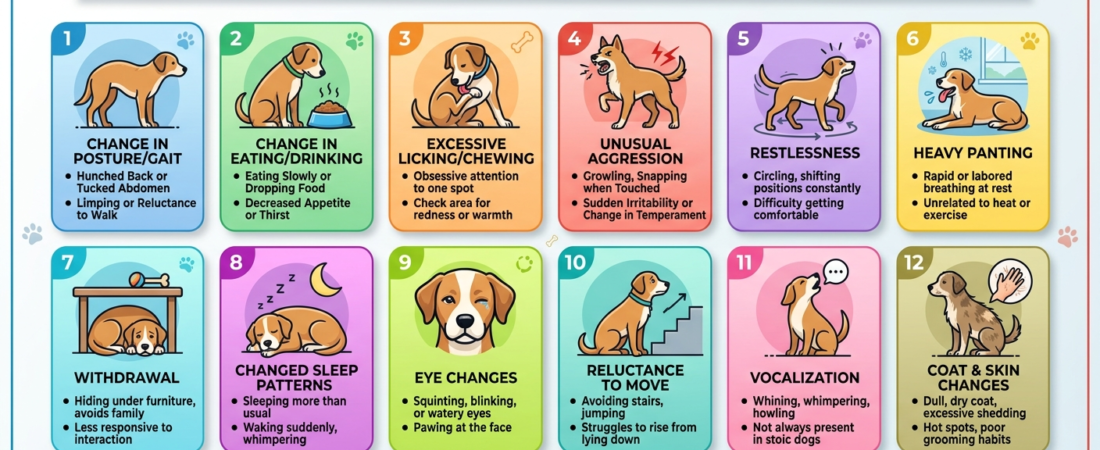
The 12 Silent Signs Your Dog May Be in Pain
1. Sudden Changes in Posture or Gait
One of the earliest and most reliable indicators of pain is a change in how your dog carries their body.
Watch for:
- A hunched back or tucked abdomen (often indicates abdominal or spinal pain)
- Reluctance to put weight on one leg
- A stiff, slow-starting walk in the morning that loosens up later (classic sign of arthritis)
- Unusual head position, held low or tilted to one side
Many owners chalk this up to “sleeping in a weird position.” But if you notice it consistently over three or more days, it warrants a closer look.
2. Changes in Eating or Drinking Habits
Dental pain, neck pain, or gastrointestinal discomfort often shows up first at the food bowl.
Signs to watch for:
- Eating more slowly than usual or dropping food from the mouth (dental pain)
- Refusing food altogether
- Sudden increase in water consumption (can signal kidney issues or internal pain)
- Preferring to eat from a raised position
A single skipped meal is rarely cause for alarm. Two or more days of appetite changes should prompt a vet visit.
3. Excessive Licking, Chewing, or Pawing at a Specific Area
Dogs cannot point to where it hurts. Instead, they focus obsessively on the source of pain.
If your dog is repeatedly licking one paw, chewing at a spot on their body, or pawing at their face or ears, they are almost certainly trying to address discomfort in that area. This is one of the most direct pain signals dogs give us and one of the most commonly misread as a simple grooming habit.
Check the area they keep returning to. Look for redness, swelling, a wound, or unusual warmth.
4. Unusual Aggression or Irritability
A normally gentle dog who snaps when touched in a particular area is not “acting up.” They are communicating pain the only way they know how.
Pain-induced aggression is one of the leading causes of dog bites in family pets. It is especially common in:
- Dogs with undiagnosed hip dysplasia
- Dogs with ear infections
- Dogs recovering from injury or surgery
- Senior dogs with arthritis
If your dog has started growling, snapping, or showing unusual irritability, especially when touched around a specific body part, treat it as a pain signal, not a behavioral problem.
5. Restlessness and Inability to Get Comfortable
Chronic pain makes it difficult to find a comfortable resting position. If your dog is circling repeatedly before lying down, getting up and moving multiple times throughout the night, or lying in unusual positions they have never used before, pain may be disrupting their ability to rest.
This is particularly common in dogs with:
- Joint pain or arthritis
- Bloat or gastrointestinal discomfort
- Spinal issues
6. Heavy Panting or Breathing Changes at Rest
Panting after exercise is normal. Panting while lying quietly in a cool room is not.
Heavy, labored, or rapid breathing at rest is a significant stress and pain signal in dogs. It indicates their nervous system is activated, often by discomfort. You may also notice shallow breathing, reluctance to take deep breaths, or audible wheezing.
If accompanied by pale gums, this is a veterinary emergency.
7. Withdrawal and Social Isolation
Dogs in pain often withdraw from the family. They may stop greeting you at the door, avoid their usual spot on the couch, hide in a corner or under furniture, or seem distant and unresponsive to interaction.
This behavioral shift in a normally social dog is one of the most heartbreaking signs of chronic pain. It is easy to interpret as depression or “getting older,” but it is frequently pain-driven.
8. Changes in Sleep Patterns
Pain disrupts sleep cycles in dogs just as it does in humans. Watch for:
- Sleeping significantly more than usual (pain is exhausting)
- Difficulty falling asleep or staying asleep
- Vocalizing during sleep (whimpering, crying out)
- Waking suddenly and seeming confused or distressed
9. Squinting, Watery Eyes, or Frequent Blinking
Eye pain is often completely overlooked by dog owners. Signs of ocular discomfort include excessive blinking, squinting in one or both eyes, watery or cloudy discharge, and the dog pawing at their face.
Eye conditions like corneal ulcers, glaucoma, and conjunctivitis are painful and can deteriorate rapidly. Any sudden change in your dog’s eyes warrants same-day veterinary attention.
10. Reluctance to Jump, Climb Stairs, or Rise from Lying Down
Mobility changes are among the clearest indicators of musculoskeletal pain. If your dog used to leap onto the couch and now hesitates at the edge, or struggles to rise after sleeping, joint pain, hip dysplasia, or spinal issues are likely contributing.
Important note: Do not wait for your dog to stop moving entirely. By the time mobility is severely restricted, pain has often been present for months.
11. Vocalization: Whimpering, Whining, or Howling
This is the most obvious sign, yet many owners still dismiss it. If your dog whimpers when touched, cries out when rising, or makes unusual sounds during movement or rest, take it seriously.
Some dogs, particularly stoic breeds like Labrador Retrievers, Huskies, and working breeds, vocalize very little even when in significant pain. The absence of vocalization does not mean the absence of pain.
12. Coat and Skin Changes
Chronic pain elevates cortisol (the stress hormone), which over time affects coat quality, skin health, and shedding. Dogs in long-term pain may develop:
- Dull, dry, or thinning coat
- Increased shedding
- Skin inflammation or hot spots
- Poor overall grooming (they stop self-grooming when it hurts to move)
What to Do If You Notice These Signs
Step 1: Document Everything
Before your vet visit, write down exactly what you have observed. Which signs, how long you have noticed them, any triggers, and any changes in routine. Videos of your dog’s movement or behavior are incredibly helpful.
Step 2: Do Not Give Human Pain Medication
This is critical. Ibuprofen, acetaminophen, and aspirin are toxic to dogs, even in small doses. Never give your dog human pain relievers without explicit veterinary instruction.
Step 3: Schedule a Veterinary Appointment
If you notice three or more of the signs above, or any single sign that is severe or sudden, contact your vet immediately. Pain management is far more effective and less expensive when caught early.
Step 4: Consider a Veterinary Pain Assessment
Many veterinary clinics now offer structured pain assessments using validated scales like the Glasgow Composite Measure Pain Scale. Ask your vet about this, especially for senior dogs or dogs with chronic conditions.
💡 Expert Note: “Pain in dogs is almost always manageable when caught early. The biggest barrier is recognition. Most owners come in saying they thought their dog was just slowing down with age, when in fact they have been in significant pain for months. Trust your instincts. If something seems off, it probably is.” General guidance consistent with AVMA veterinary pain management standards.
A Note on Senior Dogs
Dogs aged 7 and older are significantly more likely to be living with undiagnosed chronic pain, particularly from arthritis, dental disease, and organ-related discomfort. Annual wellness exams are not enough for senior dogs. Bi-annual checkups with a pain-focused assessment are the new standard of care recommended by most veterinary organizations.
If your dog is entering their senior years, bookmark this guide and revisit it every few months. The signs can be gradual and easy to normalize over time.
Conclusion
Your dog trusts you completely. They cannot advocate for themselves, file a complaint, or explain where it hurts. That responsibility falls entirely on you, and now you are equipped to handle it.
Run through this list regularly. Pay attention to behavioral changes, no matter how small. And when something feels off, act on it. Early intervention is almost always the difference between a simple fix and a serious, costly health crisis.
Your dog’s quality of life depends on how closely you are paying attention.
Have a question about your dog’s health or behavior? Reach out to us here. We respond to every message. Learn more about our mission on our About Us page.
Disclaimer
The information in this article is intended for general educational purposes only and does not constitute veterinary medical advice. It is not a substitute for professional diagnosis, treatment, or veterinary care. Always consult a licensed veterinarian regarding your pet’s specific health conditions, symptoms, or treatment options. Shop With Pets is not liable for any actions taken based on the information provided in this post. If your dog is experiencing a medical emergency, contact your veterinarian or an emergency animal clinic immediately.
Sources and References:
- American Veterinary Medical Association (AVMA) – Pain Management Guidelines
- World Small Animal Veterinary Association (WSAVA) – Pain Recognition and Assessment
- Merck Veterinary Manual – Recognizing Pain in Animals
- International Veterinary Academy of Pain Management (IVAPM)