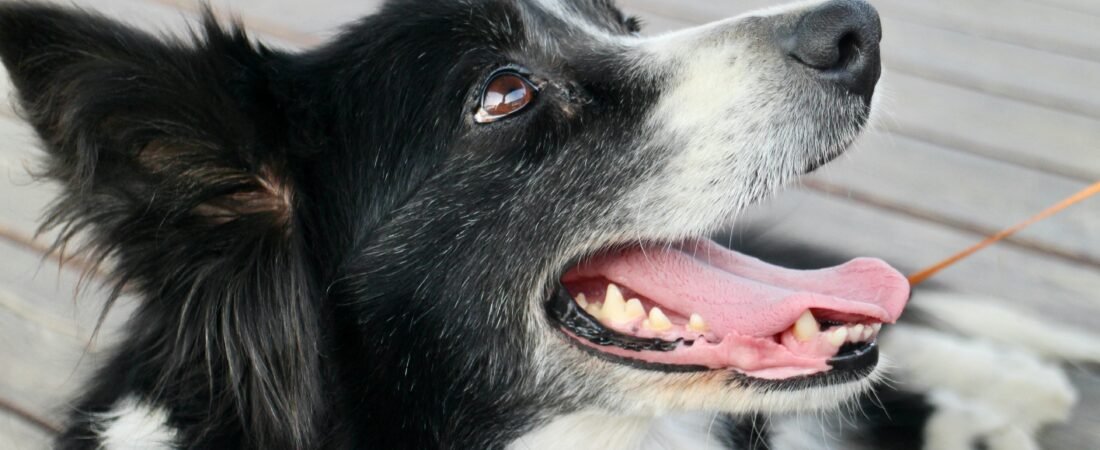
| BLOG OVERVIEW & KEY TAKEAWAYS Key Takeaway 1: When your dog stares at you with soft eyes and a relaxed body, both of your bodies release oxytocin, the bonding hormone associated with love and attachment. A 2015 study in Science found that mutual gaze between dogs and their owners triggers the same oxytocin feedback loop that bonds human mothers to their infants. Your dog is not just looking at you. They are bonding with you. Key Takeaway 2: Dogs use eye contact with humans in a way that no other animal species does, including wolves. This is a specifically evolved behavior that developed during domestication over 15,000 years of living alongside humans. Your dog’s ability and desire to read your face is uniquely human-directed. Key Takeaway 3: Not all stares are the same. A soft relaxed stare communicates love and attention. A hard, fixed stare with a stiff body communicates threat. A whale-eyed stare with tension communicates stress. Learning to read which stare is which is one of the most important skills in understanding your dog. |
You Have Wondered About This. Here Is the Real Answer.
Your dog is lying across the room. You are not doing anything interesting. You look up and they are just… watching you. Not moving. Not wanting anything obvious. Just looking at you with those eyes.
It happens constantly. And most people never find out what is actually happening when it does.
The answer involves Nobel Prize-winning research, the neuroscience of bonding, and one of the most remarkable stories in evolutionary biology: how a relationship between humans and dogs became so deep that it literally changed how both species look at each other.
More guides on the Shop With Pets blog. Learn about us on our About Us page.
The Oxytocin Discovery That Changed Everything
In 2015, researchers Miho Nagasawa and Takefumi Kikusui at Azabu University in Japan published a study in the journal Science that fundamentally changed how scientists understand the human-dog bond.
They measured oxytocin levels in both dogs and their owners before and after the owners and dogs spent time gazing into each other’s eyes. The results were striking. Mutual gaze between a dog and their owner caused oxytocin levels to rise significantly in both the human and the dog.
Oxytocin is the hormone responsible for social bonding, trust, and attachment. It is the chemical that floods a mother’s bloodstream when she looks at her newborn. It is the hormone that deepens love between partners. It is the biological substrate of social connection.
The finding meant that when your dog stares into your eyes, and you stare back, you are both experiencing a measurable biochemical bonding event. You are not imagining the feeling of connection. It is physiologically real and measurable.
The researchers then tried the same experiment with wolves raised by humans. The wolves did not initiate or maintain the mutual gaze. The eye contact behavior is not just a mammalian trait. It is something dogs evolved specifically in relation to humans.
| The Science in Plain Language When your dog looks into your eyes, both of your brains release oxytocin. The same chemical that bonds a mother to her baby. That feeling you get when your dog looks at you is not imagination. It is chemistry. Real, measurable, biological love. |
Why Dogs Evolved to Stare at Humans
This is where the story gets remarkable.
Wolves, the ancestors of domestic dogs, use direct eye contact primarily as a threat signal. A wolf staring directly at another wolf is communicating challenge or dominance. It is not a bonding behavior.
During the process of domestication over approximately 15,000 years, dogs evolved the capacity and desire to use eye contact with humans in a fundamentally different way. They developed muscles around their eyes that allow them to make an expression humans read as supplication, attention, and emotional connection. The inner brow raise that makes a dog’s eyes look larger and more child-like is a movement no wolf can make. It evolved specifically in domestic dogs, specifically in the context of human interaction.
Brian Hare at Duke University, one of the world’s foremost researchers on canine cognition, describes dogs as having evolved to be uniquely attuned to reading human social signals. No other species, including our closest primate relatives chimpanzees, follows human pointing gestures, reads human facial expressions, or seeks out human eye contact the way dogs do. This is not trained behavior. It is evolutionary adaptation.
Your dog staring at you is the product of 15,000 years of natural selection for animals who were better at communicating with humans.
The Six Types of Dog Stares and What Each Means
1. The Soft Gaze: Love and Attention
Relaxed body posture. Soft eyes with slightly squinting lids. Slow blinking. Sometimes a slightly open mouth with relaxed jaw. Tail may wag slowly.
This is the affectionate gaze. Your dog is watching you for pleasure and connection. They are paying attention to your emotional state and your behavior. Research on eye-tracking in dogs has shown that when dogs look at humans with this soft gaze, they are specifically attending to the eyes and mouth, the most emotionally expressive areas of the human face.
What to do: Look back. Blink slowly. Talk to them in your normal tone. You are participating in a bonding moment.
2. The Want Stare: Anticipation and Request
Alert, forward posture. Ears up. Eyes wide and focused. Sometimes accompanied by a small head tilt. Often directed at you or at a specific object like the leash or the treat bag.
Your dog is communicating desire and anticipation. They have identified something they want and they have learned through thousands of repetitions that looking at you is the most effective way to communicate that desire. This is a sophisticated understanding that you are the agent of outcomes in their world.
What to do: Decide whether to respond or not based on whether the behavior is one you want to reinforce. Responding to the want stare every time trains the behavior. Ignoring it sometimes trains persistence.
3. The Working Stare: Waiting for Information
This is the focused, ready stare you see in training sessions or before a walk. Your dog is waiting for a cue. They have learned that watching you provides information about what comes next.
Brian Hare’s research found that dogs are extraordinarily skilled at reading human pointing gestures, gaze direction, and subtle body language cues to locate hidden food or objects. Your dog has spent years observing you and has likely become quite skilled at predicting your behavior from your movements.
What to do: Use it. A dog in this focused state is in the best possible state for learning. Ask for a behavior. Reward attention.
4. The Worried Stare: Seeking Reassurance
Slightly wider eyes. Tense brow. Body slightly lowered or ears partially back. Often appears when something unusual is happening: strange sounds, new objects, unfamiliar people.
Your dog is looking to you for information about whether something is a threat. This is called social referencing, looking to a trusted social partner for cues about how to assess an ambiguous situation. Human infants do the same thing with their caregivers. Your dog looks at your face to see whether you seem calm or alarmed, and calibrates their own response accordingly.
What to do: Stay calm and matter-of-fact. Your dog is reading your reaction. An anxious or exaggerated response from you confirms that the ambiguous thing is worrying. A calm, confident response helps them self-regulate.
5. The Hard Stare: A Serious Warning
Unblinking, fixed, rigid gaze. Completely still body. Stiff posture. Closed mouth or tight lips. No tail movement or tail held very high and still.
This is a completely different category of stare. A hard stare in dogs is a warning signal, used toward other dogs, strangers, or in some cases familiar people in specific contexts. It communicates: I am uncomfortable with this situation and I am prepared to escalate.
A dog giving a hard stare to a person is a dog who has moved through their warning signal hierarchy to a late-stage communication. Earlier signals, growling, lip lifting, stiffening, were likely present before this.
What to do: Do not stare back. Look away and to the side. Create distance calmly. Do not punish the stare, it is the last warning before something more serious. If this behavior is occurring regularly, consult a certified trainer or veterinary behaviorist immediately.
6. The Sleepy Half-Gaze: Contentment
Half-closed, heavy-lidded eyes. Completely relaxed body. Your dog is watching you while falling asleep or in a state of deep relaxation.
This is pure contentment. Your presence is so comfortable and safe to them that they can enter a vulnerable sleep state while still keeping soft track of you. This is a profound expression of trust.
The Head Tilt: Bonus Behavior
While we are here: why do dogs tilt their head when you talk to them?
Research from the Family Dog Project at Eotvos Lorand University found that dogs tilt their heads specifically when processing meaningful sounds and words they have been trained to recognize. They are not tilting their head because they are confused. They are tilting it as part of active auditory and cognitive processing.
There is also a physical component: a dog’s muzzle partially blocks the lower visual field, and tilting the head to one side allows better visual access to the speaker’s face and lips, which dogs use to interpret communication.
The head tilt is your dog paying close, active attention.
Do Dogs Understand Human Facial Expressions?
Yes, and the evidence is extensive.
Multiple published studies using eye-tracking technology have found that dogs spontaneously attend to the eye region of human faces when assessing emotional expression, the same area humans attend to when reading faces. They can reliably distinguish between happy and angry human facial expressions.
A 2016 study in Learning and Behavior found that dogs shown photographs of human faces could correctly categorize emotional expressions at above-chance levels, confirming that they understand that facial configurations carry emotional meaning.
Your dog is not just looking at you. They are reading you.
Q&A
Q: My dog stares at me while eating. Is this normal?
Very common and completely normal. Many dogs watch their owners’ faces during meals to gather social information about the meal, about mood, and to position themselves for any opportunity. Some dogs have been reinforced for watching during meals because owners respond to the attention by sharing food. The behavior continues because it has worked historically.
Q: My dog stares at me for long periods and it feels intense. Should I be concerned?
Context determines whether extended staring is normal or concerning. Soft eyes, relaxed body, occasional tail wagging: this is normal affectionate attention. Hard, unblinking stare with stiff body: this warrants attention as a potential stress or conflict signal. Dogs who stare intensely at specific household areas or objects with apparent anxiety sometimes display this as an early cognitive dysfunction symptom in senior dogs.
Q: Does making eye contact with my dog strengthen our bond?
Research strongly suggests yes. Mutual soft eye contact between a dog and owner raises oxytocin in both parties. Deliberately engaging in soft mutual gaze daily, through moments of calm focused attention rather than the sustained staring that communicates challenge, actively builds the bonding chemistry in both of you.
Final Thought
Your dog is not staring at you because they are bored or confused or want something in most cases.
They are staring at you because over 15,000 years of evolution shaped them to look to human faces for connection, information, reassurance, and love. And because when they do look at you, their brain releases the same chemicals that make humans fall in love with each other.
The next time your dog stares at you from across the room, look back.
Something real is happening.
| DISCLAIMER This article is for general informational and educational purposes only. It does not constitute veterinary or behavioral advice. Always consult a licensed veterinarian or certified behaviorist for concerns about your dog’s specific health or behavior. Shop With Pets is not liable for any outcomes from reliance on this content. |
Sources and References:
- Nagasawa M et al. Oxytocin-gaze positive loop and the coevolution of human-dog bonds. Science. 2015;348(6232):333-336.
- Hare B, Woods V. The Genius of Dogs. Dutton. 2013.
- Müller CA et al. Dogs can discriminate emotional expressions of human faces. Current Biology. 2015.
- Guo K et al. Dog-human eye contact is modulated by received attention. Animal Cognition. 2009.